Teach Something
Teach something. Everyone who has lived and paid attention has something worth passing on. This article makes the case for sharing what you know — and explores the surprisingly powerful effect that teaching has on the person doing the teaching.
Here is something I have noticed about the people who seem most energised and most purposeful in later life. They are almost always giving something back. Not in a dutiful or obligatory way — but in the way that comes from realising, often for the first time, that what they know has genuine value to someone else.
This is the article about teaching. And I want to begin by addressing the most common response to that word, which is: I'm not a teacher.
You don't need to be.
Teaching, in the sense I mean here, is simply the act of sharing what you know with someone who doesn't know it yet. That is something every single one of us can do. The question is not whether you have anything worth teaching. The question is whether you have noticed yet that you do.
What you know that others don't
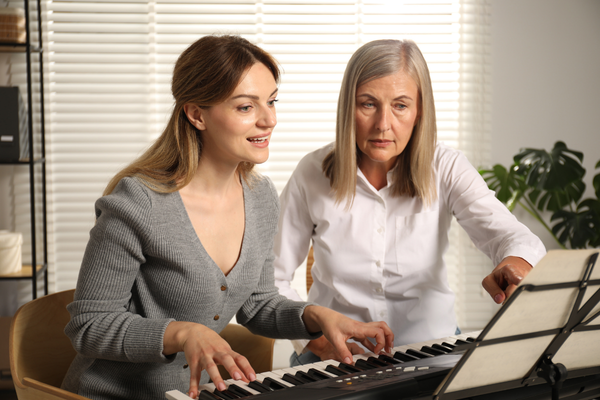
Think for a moment about the skills, knowledge, and experience you have accumulated over a lifetime. Not your career credentials necessarily — though those count — but the broader, quieter expertise that comes simply from having lived and paid attention.
Do you cook well? There are people who would genuinely love to learn from you. Do you garden? Knit? Do basic home repairs? Speak another language, even imperfectly? Have you navigated significant life experiences — bereavement, illness, rebuilding after setback — that might offer something real to someone facing the same?
Have you practised a craft, a hobby, or an art form for years? Do you know your local history? Do you understand how to manage money carefully, or grow tomatoes successfully, or keep bees, or restore old furniture?
Every single one of those things is teachable. And every one of them is wanted by someone.
Why teaching is so good for you
The benefits of teaching are remarkably well documented — and they extend well beyond the satisfaction of being useful.
Teaching requires you to organise and articulate what you know, which deepens your own understanding of it. It keeps the mind actively engaged. It provides regular social interaction and a sense of purpose and contribution. It gets you out of the house. It connects you with people — often younger people — whose energy and curiosity are themselves quietly invigorating.
There is also something that I can only describe as the particular pleasure of watching someone understand something they didn't understand before. If you have experienced that, you will know what I mean. If you haven't yet, I would encourage you to seek it out.
Where to begin
The routes into teaching as an older adult are more varied and accessible than most people realise.
Your local library, community centre, or senior learning centre will very likely welcome a volunteer who can run a regular session on almost any practical or creative skill. These settings are relaxed, informal, and genuinely grateful for experienced people willing to share what they know.
If your skills are more practical — woodworking, car maintenance, home repairs, electronics — look for a local Makers space or community workshop. These groups are always looking for experienced people to pass on skills that are increasingly rare.

If you have academic or professional knowledge, adult education programmes, community colleges, and even local schools occasionally look for guest speakers and workshop leaders. You do not need a teaching qualification for most of these.
Private teaching — one to one, or to a small informal group — is another option. A neighbour who wants to learn to sew. A family friend learning to cook. A small group of people who want to understand something you know well. None of this needs to be formal or paid. The value is in the exchange itself.
A thought on legacy
There is a word that sometimes comes up in conversations about this, and I want to use it carefully: legacy.
I don't mean legacy in the grand, monument-building sense. I mean it in the quiet, human sense — the things you pass on simply by being willing to share them. The recipe that a grandchild will make long after you are gone. The skill that a young person carries into their own life. The perspective that shifted something in someone who needed it.
Teaching is one of the most direct ways of leaving that kind of trace. And unlike many things that require physical stamina or financial resource, it is available to almost all of us, at almost any age, in some form.
What do you know that someone else needs?
Jasper Wildwood | JasperWildwood.com
Strength Returns, One Step at a Time.
This is Part 5 of the Staying Young at Heart series.
Next: Volunteer With Young People — why spending time with younger generations might be the most rejuvenating thing of all.