Super-Ager Lifestyle Guide:
A Better Way to Age
Super-Ager Lifestyle Guide. Discover simple habits for healthy ageing. Learn how movement, mindset, nutrition, and connection help seniors stay strong and independent.
A Better Way to Age
Ageing is not the same for everyone.
Some people slow down quickly. Others remain active, capable, and mentally sharp well into later life.
These individuals are often called super-agers — not because they are extraordinary, but because they live in a way that supports their bodies and minds over time.
That is what this Super-Ager Lifestyle Guide shows you.
You can begin moving in that direction at any age.
You don’t need to be fit already.
You don’t need to change everything at once.
You simply need to begin.
What Is a Super-Ager Lifestyle?
When people hear the term super-ager, they often imagine someone unusually gifted or naturally fortunate. But the truth is more encouraging than that.
A super-ager is simply someone who reaches later life with far more physical energy, mental sharpness, and everyday resilience than people expect. They may be in their sixties, seventies, or beyond, yet still move well, think clearly, stay curious, and remain engaged with life.
That matters, because growing older does not always mean fading faster.
Yes, the body changes with age. Strength can dip. Stamina may take more effort. Memory may not feel quite as quick as it once did. But ageing is not the same for everyone, and decline is not a fixed script we have to follow. Many of the habits that support vitality can be strengthened at any stage of life.
That is the encouraging heart of the super-ager idea.
It is not about pretending we are younger than we are. It is about living in a way that helps the body and mind stay active, useful, and alive.
You Can Begin at Any Time
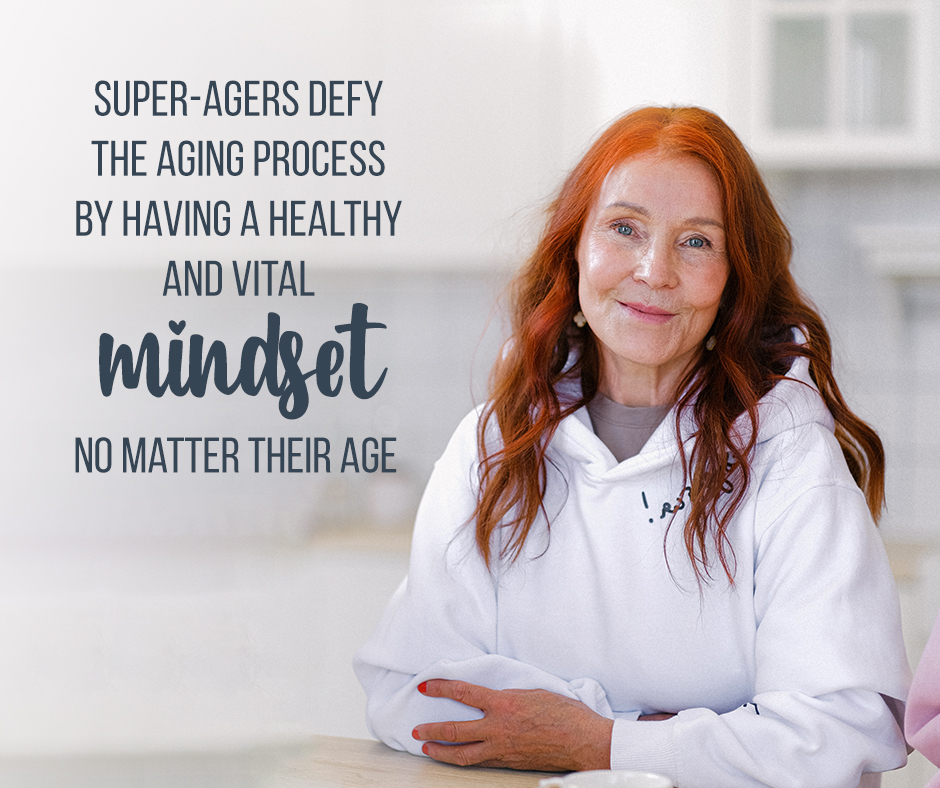
One of the most hopeful things about this way of living is that you do not need to have “always been healthy” to begin.
You do not need an athletic background.
You do not need to join a gym.
You do not need to change everything overnight.
You simply begin where you are.
Super-agers tend to have a few things in common. They keep moving. They keep thinking. They stay connected to other people. And they continue to care about something beyond the daily routine of getting through the day.
In other words, they keep participating in life.
FREE Super-Ager Starter Guide
👉 Download a free guide to rebuilding strength, improving balance, and feeling better with simple walking and steady habits.
The Four Foundations of Ageing Well
🚶 1. Keep Moving
Movement Builds Lasting Strength
A body that moves regularly tends to serve us better for longer.
Super-agers are often physically active in simple, sustainable ways. That does not mean punishing workouts or chasing fitness fads. More often, it means regular walking, steady aerobic movement, light strength work, and a willingness to keep using the body rather than letting it become more sedentary year by year.
For many older adults, walking is one of the best places to start.
It supports the heart, helps circulation, improves stamina, and encourages better balance and mobility. Add gentle strength-building over time, and you begin protecting the very things that matter most in later life: independence, confidence, and the ability to keep doing everyday tasks well.
The goal is not to train like an athlete.
The goal is to stay capable.
👉 Read more: Movement Builds Lasting Strength
🧠 2. Keep Your Mind Engaged
Think Like a Super-Ager
Super-agers do not only use their bodies. They also keep their minds engaged.
They remain curious. They solve problems. They learn new things. They give the brain a reason to stay active.
That might mean doing puzzles, reading widely, learning a language, trying a new hobby, playing strategy games, or simply choosing activities that require attention and thought. The exact activity matters less than the habit itself.
A mind that is invited to stretch often responds well.
It is easy to assume that later life should become quieter, smaller, and more repetitive. But the mind benefits from challenge, novelty, and interest. We do not stop needing mental stimulation simply because we grow older.
In many ways, it becomes more important.
👉 Read more: Think Like a Super-Ager
🍽️ 3. Eat to Support Your Body
Foods for Strength and Vitality
What You Eat Influences More Than You Think
The food you eat each day does more than simply satisfy hunger.
It quietly shapes how your body feels, how your mind functions, and how much energy you have to move through your day.
Even small improvements can make a noticeable difference over time.Energy Levels
Balanced meals help keep your energy steady.
When you eat regularly and include whole foods — such as vegetables, protein, and healthy fats — your body releases energy more gradually. This means fewer dips, fewer cravings, and less of that heavy, tired feeling that can come after processed or sugary foods.
You may find:
- More consistent energy through the day
- Less reliance on snacks or sugar
- A greater willingness to stay active
👉 Read more: Foods for Strength and Vitality
🌿 4. Stay Connected and Engaged
Doing What You Love
There is also a deeply human side to ageing well.
Seniors with the super-ager mindset are often socially engaged. They stay connected to friends, family, neighbours, groups, or causes that give shape to their days. They do not necessarily lead busy or noisy lives, but they do remain part of a wider circle.
That matters more than many people realise.
Having regular conversation, companionship, shared purpose, and a sense of belonging can lift mood, strengthen mental wellbeing, and help prevent the quiet shrinking of life that sometimes comes with isolation.
This does not mean becoming a social butterfly if that is not your nature.
It simply means staying connected in ways that feel meaningful to you.
A walking group. A church group. Coffee with a friend. Volunteering once a week. A class at the local library. A regular phone call. Small things count.
👉 Read more: Doing What You Love
Bringing It All Together
These four areas are not separate.
They support each other.
- Walking improves mood.
- Connection supports motivation.
- Better nutrition improves energy.
- Mental engagement keeps life interesting.
You do not need to master all of them at once.
You simply begin with one.
A Simple Way to Start
If you’re unsure where to begin, start with movement.
Walking is:
- Safe
- Accessible
- Effective
- Easy to build into daily life
👉 Start here: 20-Minute Beginner Walking Routine
What to Expect
With steady, consistent effort, you may begin to notice:
- Improved energy
- Better balance
- Increased confidence
- Reduced stiffness
- A gradual return of strength
Progress may feel slow at first.
That is normal.
Slow progress is lasting progress.
Have a Reason to Get Up
Perhaps one of the most overlooked parts of healthy ageing is purpose.
Super-agers often have interests, responsibilities, hobbies, or causes that continue to matter to them. They still care. They still contribute. They still feel there is something worth showing up for.
Purpose gives energy direction.
It may come through gardening, helping grandchildren, volunteering, learning, writing, making, teaching, walking with others, or being part of a local community. It does not need to be grand. It simply needs to be real.
When people feel useful, engaged, and connected to something beyond themselves, they often remain mentally stronger and more emotionally resilient.
Purpose steadies us.
Ageing Is Real — But So Is Adaptation
None of this means we can stop ageing. Of course not.
But it does mean we can influence how we age.
A sedentary life tends to make the body stiffer, weaker, and less resilient. A passive mind can become less alert. Disconnection can make life feel narrower. But the opposite is also true: movement, curiosity, community, and purpose can help us hold on to far more than we might think.
That is why the super-ager idea matters.
It reminds us that later life is not only about decline. It can also be about maintenance, renewal, growth, and adaptation.
Not perfectly.
Not endlessly.
But meaningfully.
A Gentle Way Forward
Research from the National Institute on Aging shows that lifestyle factors such as movement, mental activity, and social connection all play a role in how well we age.
If you want to move toward a super-ager lifestyle, begin simply.
- Take a walk.
- Read something that makes you think.
- Call someone you enjoy talking to.
- Return to an old interest.
- Try something new.
- Do one small thing that reminds your body and mind they are still needed.
You do not have to transform yourself in a week.
You just have to keep taking part.
Because strength is not only built in the gym. Sharpness is not only found in books. Vitality is often the result of ordinary habits, repeated with care.
And it is never too late to begin living that way.
Super-Ager Lifestyle Guide: A Final Word
You do not need to become someone new.
You simply need to support the person you already are.
Move gently.
Eat simply.
Stay engaged.
Remain connected.
Because ageing well is not about doing more.
It is about doing what matters — consistently.
And it begins with one step.

Strength returns when we move gently, consistently, and without pressure.
One step at a time is enough.